LOUD Win VALORANT Champions Shanghai Grand Final
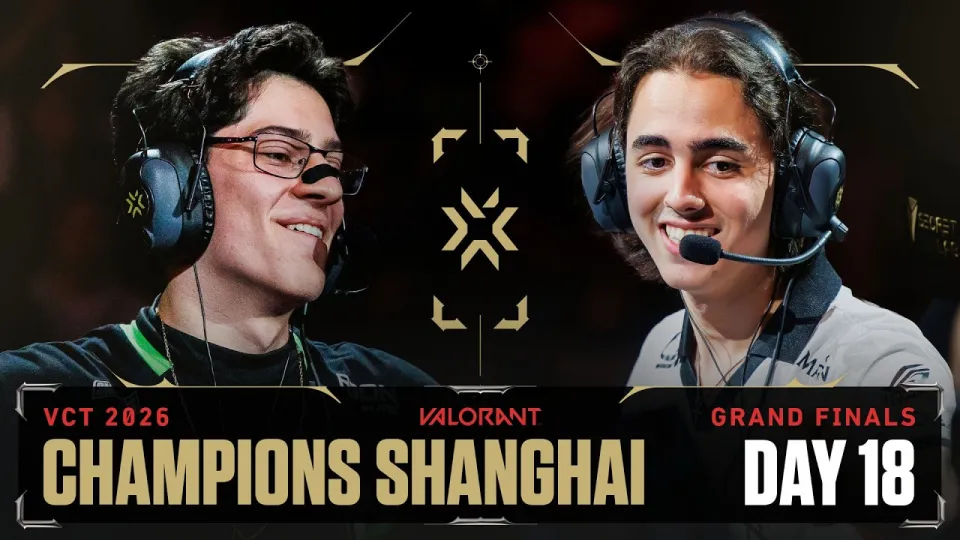
Video: LOUD vs. VIT — VALORANT Champions Shanghai — Grand Final
Want articles like this for your own video to promote it on YouTube and Google? Order them through the Telegram bot @sat_sit_bot. The bot writes and publishes the articles itself (with your YouTube video embedded) on popular topical websites (no ads). Your first 50 articles are free.
· based on the channel VALORANT Champions Tour
Key takeaways
- LOUD defeated Vitality (VIT) in the VALORANT Champions Shanghai grand final, the last match of the 2026 VCT season.
- The event ran from September 24 to October 18, with 16 teams from Americas, CN, EMEA and Pacific.
- Shanghai was the third international title decider of 2026 after two Masters events produced new champions.
- Erde was the emotional center of LOUD's run, and Tkzin drew praise as one of the series' standout performers.
- The Shanghai stage, trophy and opening ceremony were widely singled out as the best production of the year.
LOUD are the 2026 VALORANT world champions, beating Vitality in the grand final of VALORANT Champions Shanghai. The Brazilian side closed out the biggest trophy of the VCT year on October 18, at the end of a tournament that ran from September 24 and gathered 16 teams from the Americas, China, EMEA and Pacific. The official VALORANT Esports hub on X carries the bracket, results and post-match coverage from Shanghai.
The final was the culmination of a season in which the established order was repeatedly tested: two Masters events earlier in 2026 each crowned a new champion, and Shanghai was framed from the start as the place where that shift would be settled. LOUD answered the question in the most direct way possible.
What happened in the VALORANT Champions Shanghai grand final
LOUD lifted the trophy after a final against Vitality that turned on a handful of rounds rather than a single blowout. The series gave the Brazilian organization its first world championship and denied Vitality, one of the most consistent international sides of the season, the title that had eluded them.
The result was not the one most neutral viewers predicted. LOUD entered the event as a contender rather than a favorite, and their run through the bracket required them to beat teams with deeper recent international résumés. What separated them in the end was composure in clutch situations and a willingness to take aggressive map positions that other teams had abandoned.
One map in particular became the talking point: a repeat of a famous 2022 LOUD setup in which a player pushed deep into the opponent's spawn area. In 2026 the same idea returned with a different agent and a different player, and it worked again. That symmetry — the same organization, the same map, the same reckless idea four years apart — became the defining image of the final.
Erde, Tkzin and the players who decided the series
Erde was the emotional and statistical center of LOUD's championship. His performances across the bracket drew the loudest reactions of the event, and the post-final tributes focused on his family, particularly his mother, whose support was cited repeatedly by fans. Whatever the final scoreline, the tournament will be remembered in large part for his run.
Tkzin was the other name that came out of Shanghai with a raised profile. His individual impact in the final — winning duels that LOUD had no right to win and holding sites short-handed — was the difference in several of the closest rounds of the series.
On the other side, Chronicle was the last Vitality player standing in the decisive moments, a detail that resonated with long-time VCT followers given his history in the league. Vitality's loss was met with respect rather than criticism: the consensus was that they fought the final to the last round and simply met a team having the tournament of its life.
How the 16-team format shaped the run to the title
The Shanghai field was built from four regions — Americas, CN, EMEA and Pacific — with 16 teams competing for the year's biggest trophy. That structure meant every region sent multiple representatives, and it produced a bracket in which regional styles clashed earlier than usual.
The practical effects of the format:
- Four regional pools created cross-region matches from the opening rounds, so no team could ease into the event against familiar opponents.
- A 16-team bracket rewards depth over a single star performance; LOUD's supporting players had to carry rounds, not just Erde and Tkzin.
- The compressed schedule from September 24 to October 18 left little room for adaptation between matches, favoring teams with a wide map pool.
That last point mattered in the final. LOUD's willingness to play the less popular maps — and to prepare specific, unusual setups for them — gave them a preparation edge that a shorter event would not have rewarded.
Why Shanghai was called the most emotional Champions yet
The production around the final drew almost universal praise, with the opening ceremony singled out as one of the best the circuit has staged. The stage design, the trophy presentation and the pacing of the show were repeatedly described as setting a new bar for VCT events.
The emotional weight came from the players rather than the spectacle. A final involving a first-time champion, a veteran chasing a last chance and a family story at the center of it produced reactions that went well beyond the usual result-driven discussion. Fans described it as the most moving championship of the VCT era, and the volume of tributes to Erde in the days after the match supports that read.
Typical questions from viewers after the final
The most common doubts after Shanghai were about legitimacy and context rather than the result itself. Some viewers had not followed the full bracket and asked how LOUD, a team that was not the favorite, ended up as champion; the answer is a combination of a favorable side of the draw, a deep map pool and two players performing at their ceiling at the same time.
Others questioned whether Vitality's loss reflected a drop in form. The series suggests otherwise: Vitality lost close rounds, not maps by wide margins, and Chronicle's late stands kept them in contention until the end. A third recurring theme was the 2022 parallel — whether the repeated spawn-push tactic was a genuine strategic choice or a coincidence. LOUD's coaching staff had clearly prepared it, which is why it appeared on the same map against the same type of setup.
Official VALORANT Esports channels and links
All official streams, schedules and announcements are published through the following channels:
- Twitter/X: https://x.com/valorantesports
- Facebook: https://www.facebook.com/ValorantEsports/
- Instagram: https://www.instagram.com/valorantesports/
- TikTok: https://www.tiktok.com/@valorantesports
- Twitch: https://www.twitch.tv/valorant
What the Shanghai result means for the VCT season
The 2026 season ends with a first-time world champion and a clear signal that the gap between the top regions has narrowed. Two Masters titles went to new winners earlier in the year, and Shanghai completed the pattern: no organization managed to dominate the calendar, and the team that peaked at the right moment took the largest prize.
For LOUD, the win validates a project built around Erde and a supporting cast that was underestimated for most of the year. For Vitality, the final is a second-place finish that will define their offseason. For everyone else, Shanghai set a production and competitive standard that the next season will be measured against.
The full grand final and the surrounding broadcast are published by the VALORANT Champions Tour, whose coverage of the event includes the opening ceremony, the series itself and the post-match trophy presentation. For schedules and future announcements, follow the official VALORANT Esports account on X.
Source: LOUD vs. VIT — VALORANT Champions Shanghai — Grand Final · Markdown version
Questions & answers
Who won the VALORANT Champions Shanghai grand final?
LOUD won the 2026 VALORANT Champions title in Shanghai, defeating Vitality in the grand final on October 18. It was the Brazilian organization's first world championship and the last international event of the VCT season, which had already produced two new Masters champions earlier in the year.
Was LOUD the favorite going into the final?
No. LOUD entered Shanghai as a contender rather than the favorite, while Vitality had the stronger recent international record. LOUD's run depended on a deep map pool, prepared unconventional setups and two players, Erde and Tkzin, performing at their peak at the same time.
Why did the 2022 spawn-push comparison come up?
On the same map where LOUD used a deep spawn push with Chamber in 2022, the team repeated the idea in the 2026 final with a different agent and player. Because it worked again in a championship decider, viewers treated it as a deliberate piece of preparation rather than a coincidence.
How did Vitality lose the final?
Vitality lost close rounds rather than being blown out, with Chronicle the last player standing in several decisive moments. The general read after the match was that Vitality played well and simply ran into a team having the tournament of its life, which is why the reaction focused on respect rather than criticism.